


We were developed from a processing enterprise established in 2009 that integrates design and production. We are a comprehensive professional company integrating R&D, production and trade. We have professional designers who can provide you with the most professional packaging solutions based on the packaging requirements of different products.
Why Choose Us
Our Factory
Xinpai Packaging has developed from a processing enterprise that integrates design and production. It is a comprehensive professional company integrating R&D, production and trade. With professional designers, we can provide you with the most professional packaging solutions according to different product packaging requirements.
Our Equipment
We have advanced equipment for painting, woodworking, engraving, and assembly. These tools help us ensure high-quality production and efficient processes.
Our Products
We offer a variety of products, such as watches, jewelry, gold, and high-quality alcoholic beverages.
-
![Universal White Corrugated Folding Box]() Universal White Corrugated Folding BoxWhite boxes lend a certain appeal and style to shipping boxes. White offers a clean fresh look that is unlike a kraft box. Printing on white corrugated boxes makes colors standout against the bright
Universal White Corrugated Folding BoxWhite boxes lend a certain appeal and style to shipping boxes. White offers a clean fresh look that is unlike a kraft box. Printing on white corrugated boxes makes colors standout against the bright -
![Corrugated Brown Box]() Corrugated Brown BoxCorrugated brown box are made up of a few layers of material rather than just a single sheet like cardboard.
Corrugated Brown BoxCorrugated brown box are made up of a few layers of material rather than just a single sheet like cardboard. -
![Special Hard Express Packaging Box]() Special Hard Express Packaging BoxThis is a color gradient express delivery box with stable and durable materials that can be customized according to your preferences
Special Hard Express Packaging BoxThis is a color gradient express delivery box with stable and durable materials that can be customized according to your preferences -
![Color Cardboard Box for express delivery]() Color Cardboard Box for express deliveryThis is a color printing transport box suitable for all industries for express delivery
Color Cardboard Box for express deliveryThis is a color printing transport box suitable for all industries for express delivery -
![Zippered Cardboard Shipping Box]() Zippered Cardboard Shipping BoxThe zippered cardboard shipping box can prevent theft and is not easy to pop open
Zippered Cardboard Shipping BoxThe zippered cardboard shipping box can prevent theft and is not easy to pop open -
![Personalised Mailing Boxes]() Personalised Mailing BoxesThe extra hard transport box supports personalized customization and is suitable for various industries
Personalised Mailing BoxesThe extra hard transport box supports personalized customization and is suitable for various industries -
![Extra Hard Black Cardboard Box]() Extra Hard Black Cardboard BoxCustomized black cardboard shipping box, you can add your own logoMinimum order quantity: 1,000 units
Extra Hard Black Cardboard BoxCustomized black cardboard shipping box, you can add your own logoMinimum order quantity: 1,000 units


Advantages of Cardboard Box
Recyclable
The environmental benefits of cardboard are immense. It is not only recyclable, but it does not require special treatment to dispose of, and most places will pick up your old cardboard packaging through their recycling program, so you aren't wasting energy getting rid of them by dumping them in the bin or burning them!
Versatility
Cardboard Box is flexible, strong and adaptable. It can be creatively adapted to suit any size or shape product you have in mind, which is why there are so many variations of it, including mailing tubes.
Cost-effective
One of the main benefits of cardboard packaging is that it's much cheaper, with many businesses opting for this solution. This doesn't mean that using cardboard compromises quality or safety.
Customisation
Cardboard Box is a simple material that can be transformed in many ways to create something unique, like with our custom mailing tubes. You have the opportunity to print on it, emboss it and even put shapes or designs into its surface so you get an individualised product for your company.
Protection
Cardboard Box can be easily layered with additional materials like corrugated or cushioning inserts, foam, bubble wrap, or air pillows. These added elements create a cushioning effect that helps absorb shock and vibrations during transit, reducing the risk of damage to the packaged items.
Cardboard is so versatile because there is a wide range of different packaging options available. Cardboard is easily mass-produced, but can also be tailor-made to meet specific requirements and to transport and protect particular items.
But while cardboard comes in different shapes and sizes, there are three major types of cardboard packaging commonly used for industrial shipping and storage. These are:
- Single-walled cardboard boxes
- Double-walled cardboard boxes
- Fibre drums
Single-walled cardboard boxes are the most cost-effective option, offering a good deal of protection, as well as being lightweight and versatile. Double-walled cardboard boxes have two layers of cardboard and, while more expensive and heavier, offer an added layer of protection.
Fibre drums are circular containers produced from rigid cardboard fibre. They offer a high level of protection and can be fitted out with drum liners in order to store liquids, as well as solids. Fibre drums are often used to store food (they are food-grade quality) but are also UN rated for the transport of dangerous or hazardous goods.
How Cardboard Boxes are Made?


Cardboard boxes are available in a wide range of shapes, sizes, and designs to accommodate different product requirements. Typically, these boxes are crafted from recycled paper or tree pulp. The resulting paperboard is made by layering treated and pressed pulp to form a sturdy material.
The process of manufacturing cardboard boxes starts with robust papers derived from tree pulp. The tree fibers undergo various treatments to produce the durable raw materials needed for box production.
Pulping Process
Pulping is the technique used to produce paper for paperboard. This process involves breaking down raw materials into individual fibers, known as paper pulp. The goal of pulping is to remove lignin from the fibers while preserving the fiber structure. Various methods, including chemical, mechanical, and biological techniques, are employed for pulping, with all requiring approximately 26.4 gallons (100 liters) of water to create one kilogram of paper.
Bleaching methods vary based on the pulp's color, the chemicals used, and the treatment types. The primary bleaching techniques include delignification, oxidation, and reduction, all involving chemical reactions.
During the final processing stage, the pulp is passed through blades that flatten the fibers and create fibrillated ends to enhance bonding and strength. Fillers are incorporated to increase the pulp's density and opacity. At this point, the pulp is prepared for the paper machine.
The paper machine utilizes a series of mechanisms to dry the pulp by passing it through rotating wires and belts that remove the water. Pressure and heat are applied to eliminate any remaining moisture before the paper is wound onto large rolls.
Cardboard boxes, commonly used for shipping, come in various sizes to accommodate a wide range of products. The most common cardboard box dimensions for shipping typically range from small to extra-large, with variations in length, width, and height to suit different items. Here are some standard shipping box dimensions:
Small Box: 8 x 6 x 4 inches (20.32 x 15.24 x 10.16 cm) and (203.2 x 152.4 x 101.6 mm)
Medium Box: 18 x 14 x 12 inches (45.72 x 35.56 x 30.48 cm) and (457.2 x 355.6 x 304.8 mm)
Large Box: 24 x 18 x 18 inches (60.96 x 45.72 x 45.72 cm) and (609.6 x 457.2 x 457.2 mm)
Extra-Large Box: 24 x 24 x 24 inches (60.96 x 60.96 x 60.96 cm) and (609.6 x 609.6 x 609.6 mm)
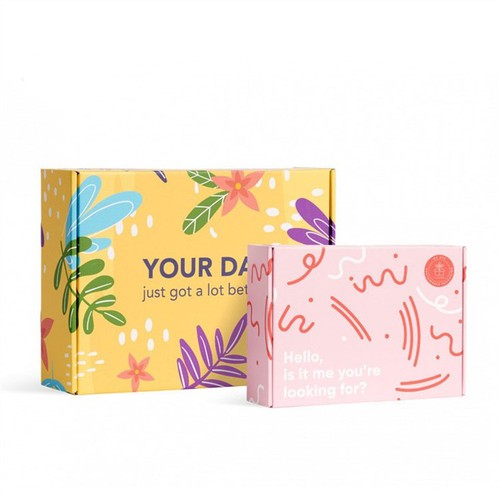
How Choosing to Cardboard Box
Choosing a box based on item weight
Although the size of your items is an important consideration when selecting the correct box, it's also vital to think about how much they weigh. Lighter items are fine to be transported in a single wall box – in fact, doing so will be cheaper for you and better for the environment. For heavier goods, you may want to think about investing in double wall boxes.
As a general rule, items up to 10kg can be transported using a single wall box, although it does depend on the size of the box being used. For items up to 18kg, a double wall box is recommended, depending on the size of the box. If your item weighs more than 20kg, then you'll need to look into specialist packaging methods.
Choosing a box based on item shape
In addition to size and weight, the shape of your items is worth considering when selecting an appropriate box. boxes can be filtered by long, short, square, and tall shapes, enabling you to choose the box that's right for your item. The website only gives a small selection of sizes. We make ANY box size to order.
We recommend leaving up to 20mm of space all around your items if you wish to add bubble wrap (depending on how much is required for your item), and no more than 5mm of extra space on each dimension for manoeuvrability. Leaving too much space and relying solely on packaging protection can result in your packages rattling and becoming damaged. Equally, transporting poorly fitting goods in large containers is not cost-effective or environmentally friendly. This is why we make bespoke boxes and work to internal dimensions.
FAQ
We're well-known as one of the leading cardboard box manufacturers and suppliers in China. Our factory offers customized cardboard box made in China with competitive price. Welcome to contact us for wholesale service.
Custom White Corrugated Box Express Packing Shipping Box, Custom Shipping Boxes


